
0 Comments
 Public relations professionals are often accused of "spinning" a story, or stretching the truth. If you believe in stereotypes, the average public relations professional is someone who is trying to sell the public on half-truths to make the big bucks.
At Mack Communications, at least, this is far from how public relations works. The goal of public relations is to help individuals, companies, and officials tell their story. Many companies don't know how to do this best, or how to explain their work to the public in an clear way. Public relations uses "spin" to tell a client's side of the story.  The internet has the tendency to bring out an ugly side of people. You don't need to scroll too far through the comments section of any article to find poorly punctuated, nasty comments. Although the Constitution guarantees our right to free speech, you have the right to control what is posted on your company's social media pages. Irrelevant and nasty comments could cast your business in a bad light or distract from content you've put online.
While it can be tempting to delete any less-than-glowing comment, we suggest putting a comment policy statement in place on social media platforms. This way you can explain why certain comments have been deleted without the risk of being called discriminatory. 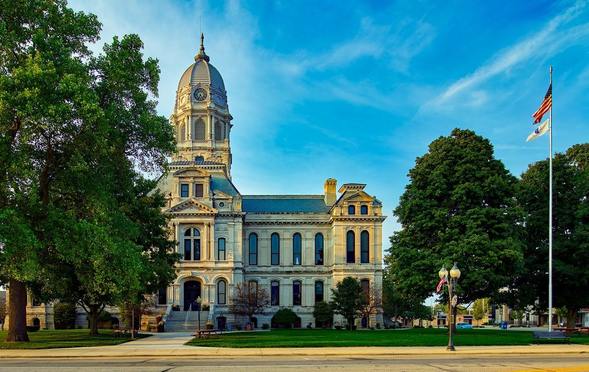 At the foundation of a fair and open government is transparency. Clear communication between the government and constituents leads to greater public trust, civic engagement, and effective policies. This is where the public affairs part of public relations comes in.
Social media and the internet make it easier than ever for local governments to keep their constituents informed. Unfortunately, however, we find that many governmental units are still stuck in the last century. Many also cling to the instinct of no news is good news, putting out press releases only in crises.  The scene is familiar to anyone who has watched cable news: A reporter with a microphone catches a CEO outside of his office and asks about a recent company controversy; the CEO is surprised and annoyed; he shoves his hand in front of the camera and says, “No comment,” before scurrying away.
At Mack Communications, the phrase “no comment” makes us cringe. More often than not, the public assumes guilt when they hear it. “No comment” is now equated to, “Yes, we’re guilty, but we don’t want to admit it,” or “We have something to hide.” In today’s interconnected world, it’s incredibly easy for companies to communicate with the public. A business can email, Tweet, or send a press release. It’s also very easy for the public to speculate and spread false information through these mediums, fast. Saying “no comment” provides no information, encouraging the media or public to create their own narratives.  Timeliness: For reporters, it’s one of the most important elements of a story. It can determine whether your big announcement has five journalists writing about it or none. But what is timeliness exactly, and how should you utilize it in your PR strategy?
According to dictionary.com, to be “timely” is to be “occurring at a suitable time; seasonable; opportune; well-timed.” In the media world, a timely story has some sort of “hook” that makes it relevant to the day’s news and events. Timeliness answers the question “Why am I hearing about this now?” for the public. 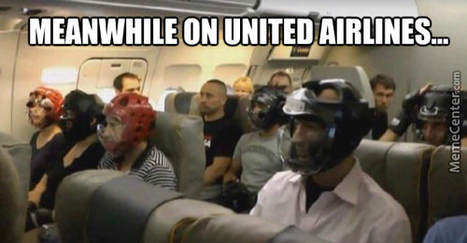 It’s that time of year again: We’re here to review what we view as the year’s biggest bloopers and blunders in public relations and communications. For better or for worse, there was no shortage of scandals and outrageous moments in 2017 across the public and private sectors. Here are what we think were some of this year’s biggest (and preventable) PR disasters.
The Infamous United Airlines Incident Is there anyone who doesn’t know about the United Airlines incident? This now infamous PR disaster began when a United passenger, Dr. David Dao, was violently dragged off an overbooked United flight. The scene was caught on cellphone videos and quickly went viral. Chief executive Oscar Munoz only fanned the flames with his non-apology for having to “re-accommodate” Dr. Dao. A leaked email from Munoz to employees also called Dr. Dao “disruptive and belligerent.” United recovered slightly a few weeks later when it released a list of ten improvements the company would make to avoid similar incidents. Mack assessment: As we often say on the Mack Report, honesty is the best policy. While it’s best to admit (and potentially apologize and correct) for a blunder early, don’t think it’s ever too late. It’s also important to avoid playing the blame game; take responsibility for your own mistakes. We think United could have kept the situation more under control by taking credit earlier for its mistake, calling it what it is, showing empathy and apologizing to Dr. Dao.  This is the final of a three-part series on how to conduct a successful interview with the media. Read previous posts about understanding the media and preparing for an interview.
Now that you’ve done your research and prepared your talking points, it’s time for the big event! Follow our top ten pieces of advice below, and you’ll be well on your way to being an interview pro:  This is part two in a three-part series on how to conduct a successful interview with the media. Read the previous post about understanding the media here.
One of the easiest ways you can make sure you have a successful interview is to adequately prepare. Below are our top pieces of advice to help you prepare for an interview. Know what to expect: Conduct some research yourself: Has the reporter written on this topic before? What angle did they take? This might give you a better sense of what to expect during your interview. You can also ask the reporter what types of questions will be asked to get a general sense (they probably won’t give you specific questions). Make sure you’re up on current events in your field so you're less likely to be caught off-guard by a question.  This is part one in a three-part series on how to conduct a successful interview with the media.
Being interviewed by the media can be nerve-wracking, no matter how many times you’ve done it. However, interviews don’t have to be painful experiences; with the right amount of understanding and preparation, anyone can make it through an interview like a pro. The best way to ensure you start off on the right foot is to understand the media, so you better know what to expect. Before your interview, consider the following points: |

Photos from Meet the Media Guru, Joseph.Morris, BoldContent, MDGovpics, Grzegorz Łobiński, Mr Moss, North Charleston, ITU Pictures, wistechcolleges, .v1ctor Casale., www.audio-luci-store.it, katielips, editor64, NeighborLink Fort Wayne, AMagill, timsackton, MyFWCmedia, Matt J Newman, Mr.TinDC, Skley, mikecogh, othompsonski, wayne's eye view, Elvert Barnes, woodleywonderworks, North Charleston, MoBikeFed, flossyflotsam, North Charleston, NYCDOT, US Mission Geneva, jjandames, aalborgstift, BurnAway, A. Germain, North Charleston, NCDOTcommunications, IAEA Imagebank, The Chapman Cultural Center, hitsnooze, Wiertz Sébastien, charliekwalker, cliff1066™, TheeErin, woodleywonderworks, dane brian, Aramil Liadon, 2010 World Wheelchair Basketball Championships, Ty Nigh, freddthompson, Nadia Szopinska, west.m, stormwarning., Bright Meadow, Giorgio Montersino, Chris Erwin, Aplomb, jfingas, joce01_y, Massachusetts Dept. of Environmental Protection, Kevin Walter, Andrew Feinberg, Yan Arief, kellypretzer, Korean Resource Center 민족학교, veDro - l'Italia al futuro, crdotx, US Mission Geneva, Joe Shlabotnik, esocialmediashop, Stephen Cummings, CarbonNYC, sidewalk flying, MoBikeFed, marksdk, Marco Raaphorst, Saleel Velankar, adactio, edkohler, World Economic Forum, USACE Europe District, stereogab, Florin Rosoga, MikeSchinkel
